market updates · Uncategorized

Why the 2026 Housing Market Still Looks Strong


If youโ€™ve been following national real estate headlines, you might think the housing market is either slowing to a crawl or on the brink of collapse. But here in Minneapolisโ€“St. Paul, that narrative doesnโ€™t quite fit.

Economists that look at real estate markets nationwide agree!

What weโ€™re experiencing right now isnโ€™t a boom or a bust. Itโ€™s something we havenโ€™t seen in years: a more normal housing market. And when you zoom out and look at the bigger picture, that normalcy may actually set Minneapolis up for a strong 2026.

What the Minneapolis Housing Market Looks Like Right Now

This past year has been briskโ€”but not chaotic. Homes arenโ€™t selling in minutes anymore, and thatโ€™s an important shift.

  • The average home is spending about 39 days on the market. This is consistent with past years.
  • Interest rates have largely held steady in the mid-6% range for 30-year fixed mortgages
  • Buyers have more breathing room, and sellers are still seeing solid demand

When you compare todayโ€™s market to the frenzy of 2020โ€“2022, it feels very different. But when you compare it to 2019, it starts to look familiar. Balanced. Measured. Functional.

Thatโ€™s not a bad thing.

Why Minneapolis Keeps Ranking as a Top Growth Market

Despite higher interest rates and a slower pace, Minneapolis continues to show up on top 5 growth market lists from major real estate organizations like Zillow, Redfin, and the National Association of Realtors.

So why does this metro keep punching above its weight?

1. Relative Affordability for a Major Metro

For a city of this size, Minneapolis remains comparatively affordable. We offer strong job markets, respected healthcare systems, major universities, and vibrant arts and cultural amenitiesโ€”without the price tags seen in many coastal cities.

That affordability continues to attract buyers from higher-cost regions of the country.

2. Climate Stability Is Becoming a Housing Factor

While not always part of traditional real estate conversations, climate resilience is increasingly influencing long-term housing demand.

The Upper Midwest is more insulated from many of the climate-related disasters impacting other parts of the U.S., and that stability is quietly shaping migration patterns. Over time, this contributes to sustained housing demand.

3. Ongoing Housing Shortages

Housing inventory remains tightโ€”and thereโ€™s little indication that this will change quickly.

  • New construction remains expensive
  • Building material costs continue to be impacted by tariffs
  • Labor shortages are worsening due to immigration crackdowns that reduce the availability of skilled workers on job sites

Fewer homes being built means continued pressure on prices, even in a calmer market.

What to Watch Heading Into 2026

No market is without risk, and itโ€™s important to stay realistic.

Employment trends matter, and national unemployment rates have been increasing. A weakening job market can always influence buyer confidence. That said, real estate is deeply local.

We remain below national rates!

When you look specifically at Minneapolis and the broader Upper Midwest, the fundamentals remain strong: stable demand, limited supply, relative affordability, and long-term desirability.

Why a โ€œNormalโ€ Market Is Actually Good News

This isnโ€™t the frenzy of 2021, and it isnโ€™t a market falling apart either.

Itโ€™s a steadier environment where:

  • Buyers can make thoughtful decisions
  • Sellers still benefit from constrained inventory
  • Pricing is supported by fundamentals rather than hype

For people who understand the local market, this kind of balance can be incredibly healthyโ€”especially as we look toward 2026.

Final Thoughts

If youโ€™re buying, selling, or considering a move to Minneapolis, understanding local conditions matters far more than national headlines. The Twin Cities market continues to show resilience, stability, and long-term promiseโ€”even as other regions experience very different outcomes.

As always, all real estate is local. And right now, Minneapolis is quietlyโ€”and confidentlyโ€”holding its ground.

market updates

Twin Cities Real Estate Market Update โ€” November 2025

As we approach the end of the year in Minnesota, the rhythm of life shifts. The days get shorter, the temps get colder, and people settle into the cozy rituals that make winter here feel special. And right on schedule, the real estate market slows down, too.

But slowing down doesnโ€™t mean declining. In fact, the Minneapolisโ€“St. Paul market remains one of the strongest and most stable in the country, especially when you focus on the 7-county metro, which is where most buyers want to be.

Hereโ€™s whatโ€™s happening right now โ€” and what it means for buyers and sellers heading into 2026.


Year-Over-Year Appreciation: Slow, Steady, Healthy

For previously owned single-family homes, the year-over-year appreciation rate is 4.5%.
This is exactly where we want to be โ€” growing, but not overheated.

Some markets around the country are seeing price declines.
We are not.

Home prices here continue to hold their value, even when individual listings make price adjustments.


A Spotty, Discerning Market

The 2025 market is unusual โ€” but honestly, when hasnโ€™t it been?

Hereโ€™s the pattern weโ€™re seeing:

  • Homes at or below the median price point often sell quickly and may receive multiple offers.
  • Higher-priced homes have a smaller buyer pool and may sit longer.

Across all price points, buyers are becoming more selective.
They want move-in ready. They want value. They want fewer reasons to hesitate.

For sellers, this means preparation matters more than ever.
Removing objections before buyers walk in the door is critical.


Current Prices and Inventory Levels

Previously Owned Single-Family Homes (7-County Metro)

  • Median price: $418,000
  • Average price: ~$508,000
  • Months supply: 1.7
    This number has not budged in more than a year.

Anything under 5 months of supply is considered a sellerโ€™s market, and we are firmly in that territory.

New Construction

  • Median price: $600,000
  • Average price: ~$713,000
  • YOY appreciation: 6%
  • Months supply: ~6 months

New construction is a balanced market, offering buyers an abundance of choiceโ€”but typically with trade-offs, including larger homes on smaller lots and landscaping that wonโ€™t feel mature for years.


Why Winter Is One of the Best Times to Buy

If youโ€™re planning to buy at all, winter often provides the strongest buyer advantages:

  • More motivated sellers
  • Less competition
  • More negotiation power
  • More time to make decisions
  • Less pressure to waive protections

You can often secure a lower price in November or December than you can in the spring, when additional buyers flood the market.


Looking Ahead: Predictions for 2026

The Chief Economist for the National Association of Realtors predicts a 16% increase in home sales next year, assuming the Federal Reserve reduces interest rates as the economy cools.

If interest rates drop to around 6% or below, demand could skyrocket.

That sounds great for affordability โ€” but keep in mind that lower rates also mean more competition. Prices and bidding activity typically rise when buyer demand returns in force.

And remember:
Minnesotaโ€™s spring market starts in January.

Every year, without fail.

If youโ€™re hoping to avoid competition, winter may be your moment.


Final Thoughts

Whether youโ€™re buying or selling, strategy is everything.

  • Buyers: Winter gives you leverage and options.
  • Sellers: Patience is key in slower segments, but demand always returns with the new year.

The Twin Cities continues to offer stable appreciation, strong demand, and a market that behaves differently from many coastal or high-volatility areas.

And if youโ€™re relocating here โ€” welcome. Itโ€™s a great place to be, even in the winter.

If you want personalized advice or want to start a conversation about buying or selling in 2026, Iโ€™m here to help!

Send me a message at mschumann@kw.com

market updates

๐Ÿก Minneapolis Real Estate Market Update โ€“ July 2025


More Homes. Less Pressure. But Still a Sellerโ€™s Market?

If youโ€™ve been watching the Minneapolis housing market over the past few years, you might be wondering: is this finally the shift weโ€™ve been waiting for? In short โ€” kind of!

Hereโ€™s what Iโ€™m seeing on the ground (and in the numbers) right now as of July 2025.


๐Ÿ“ˆ Inventory Is Rising โ€” and That Matters

Weโ€™ve seen a 31% increase in listings since the start of the year, and there are now about 7,300 active listings in the 7-county Twin Cities metro. Thatโ€™s nearly 1,000 more homes than this time last year.

More homes on the market means more choices โ€” and a little less panic โ€” for buyers.

Almost every county is now over 2 months of housing supply:

  • Anoka and Ramsey Counties are still under 2 months.
  • Carver County is leading the pack at nearly 3 months.

๐Ÿ“Š Quick Inventory Refresher:

  • 0โ€“5 months = Sellerโ€™s market
  • 5โ€“6 months = Balanced market
  • 6+ months = Buyerโ€™s market

So yes, weโ€™re still in a sellerโ€™s market technicallyโ€ฆ but emotionally, it feels like a big relief for buyers compared to the frenzied pace of the past few years.


๐Ÿงญ Buyer Experience: More Room to Breathe

If youโ€™re coming from out of state โ€” especially places where homes are lingering on the market or negotiation cycles are long โ€” the Twin Cities might feel strange.

We still see multiple offers. Especially for homes that are:

  • Closer to the city
  • Priced right
  • In โ€œ1 out of 10โ€ condition (mint and move-in ready)

Those homes? Theyโ€™re flying. Still.
But listings that need a little TLC, staging, or smart pricing? Buyers are negotiating, and sellers are making concessions.


๐Ÿ’ก What Accepted Offers Are Looking Like Right Now

The transaction coordination team I use (Home Free TC) provided a quick market snapshot based on 47 accepted offers between July 1โ€“11, 2025. Itโ€™s a small sample, but all from busy, high-volume agents:

  • 15% of buyers waived inspections (thatโ€™s way down from the last few years)
  • 21% were cash offers, 70% conventional financing
  • Median sale-to-list price: 100%
  • 28% of offers included seller-paid closing costs
  • Only 4% used escalation clauses, and just 8% included appraisal gap coverage
  • Home warranties included in 11% of deals
  • Cancellation rate: 2%

Takeaway? The market is calmer. Strategic. Thoughtful. But good homes still move fast.


๐Ÿ  How Property Types Are Trending

๐Ÿ”น Single-Family Homes:

  • Median price: $415,000
  • YOY increase: +3.8%
  • Median days on market: 14 (including inspection!)
    Most homes go under contract within the first week.

๐Ÿ”น New Construction:

  • Median price: $595,000
  • YOY increase: +4.9%
    Thereโ€™s more supply than demand here, which means more negotiating power for buyers. A great opportunity right now.

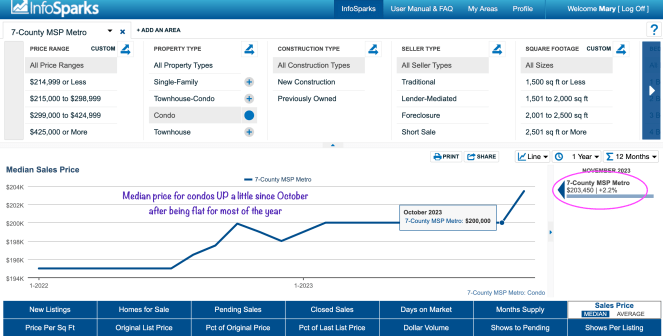
๐Ÿ”น Condos:

  • Median price: Just over $200K
  • Flat pricing, and days on market are increasing.
    Supply > demand = slower sales.

๐Ÿ”น Townhomes:

  • Median price: $310,000
  • Median days on market: 30
    Townhome prices are holding steady, but longer market times are giving buyers a bit more wiggle room.

๐Ÿ’ฌ Soโ€ฆ Is It a Buyerโ€™s Market Yet?

Not quite โ€” but weโ€™re headed in that direction, and it feels a whole lot better for buyers than it did even a year ago.

If youโ€™re thinking about buying, there are real opportunities right now.
If youโ€™re selling, presentation and pricing matter more than ever โ€” but you still hold strong ground.


๐Ÿค Want Help Navigating This Market?

Whether youโ€™re relocating, downsizing, upsizing, or just exploring options โ€” Iโ€™m here to help. Iโ€™ve worked with clients all across the country and love helping people figure out whether Minnesota is their next home.

๐Ÿ“ฉ Feel free to reach out โ€” mschumann@kw.com or call / text 773-791-2015

Thanks for reading!
โ€“ Mary Schumann


Living in Minneapolis · market updates

The MINNEAPOLIS SPRING HOUSING MARKET is LIT ๐Ÿ”ฅ

I just did a video that gives real life examples of what is happening in the 7 county metro Twin Cities housing market right now and wanted to share it with you. Things have changed QUICKLY!

Let me know if you have questions about the market or how to WIN in this market. The pandemic was a good boot camp for agents that made it through!

Home Buying · Home equity · home selling · market updates · Uncategorized

Opportunities for buyers? Twin Cities real estate market update!

What is happening in the Minneapolis areaย real estate market? I’ve been following several metrics over the pastย few years and there are a few that really stand out to me as indicative of how the market is doing, not just PRICE but what kinds of terms are included in winning offers and I will let you know which terms are revealing the current state of the market here.ย ย 

I’m keeping my finger on the pulse of what is happening in the Twin Cities metro real estate market so you can be an informed buyer or seller.

The number one question that most people have about homes is whether or not prices are falling? I keep hearingย this and for the purposes of this discussion I’m just going to look at the 7 county metro around Minneapolis and St. Paul and we can check the different housing types. Theย firstย is the most popular -SINGLE FAMILY HOMES.ย  When I was digging into data for this update I decided to look at it over the past year and the past 10 years so that I can show you trend lines for both.ย  I’m also going to differentiateย by new constructionย and previously owned because new construction is at a vastly different price point as a whole.ย 

Prices & time on market for existing homes

Metrics that I didn’t talk about in the video are how long houses are staying on the market these days. I do see houses sitting for quite a long time in certain areas and price points but the official numbers are charted here. The graph gives the impression of a big increase in time, but real numbers equate to only 3 more days.

New Construction

I’ll talk about pricing but for new construction I see a lot of opportunity for buyers here! Why? Builders have a lot of inventory right now. They have completed homes as well as homes that are underway with completion dates coming up. They need to get these homes off their books so they can continue to build and the interest rates have slowed things down for everyone, but the big builders are offering rate buy downsย for buyers right now along with all kinds of other incentives, from appliance packages to closing costs.

Things to consider are that these homes are mainly being built inย 3rd ring suburbs and exurbs so if proximity to the city is important you’re less likely to be able to get a new build – or at least one with a big builder that can offer these incentives. There are customย builds on lots here and there in the city.ย 

You’ll see a slight dip in median price ($5000) from the beginning of the year.ย  I have read in multiple sources that they estimate that it would take 10 years of building for the builders to catch up to demand for homes due to the after effects of the housing recession in 2008. We are still that far behind. New construction is showing over 6 months worth of supply but take this with a grain of salt because builders list homes that are TO BE BUILT – so they aren’t existing yet – along with those that they have ready for a buyer to move into.ย 

New construction supply shows a buyers market! I haven’t seen this kind of number in a VERY long time. Ever?ย 

Things are different when you look at previously owned homes. It is still a sellers market, although not the insane sellers market of a year or 2 ago. Homes still get multiple offers, theย market is still moving just not at a runaway pace. Previously owned single family homes areย sitting at about 1.3 months supply. So you can see the difference here.ย 

WHY is it a seller’s market for existing homes and a buyer’s market for new constructions?

What leads to this? 80% of people with a mortgage on their home are paying less than 5% interest, 50% of them have a rate at less than 4%, they need a bigย incentive to list their homes and buy a different home with a mortgage at a higher rate. This really is one of those cases where as usual, of you have a good budget you are at an advantage because you can buy new construction and take advantageย of the market and the incentives whereas those 2 things don’t exist as much for existing homes, prices are lower as a median but supply is lower too and you don’t get the builder buy downs. But you also don’t have to pay for a deck or the multitude of finishing touches that need to be added to new construction.ย 

Price reductions

Housing inventory is dropping now as we get into the winter and holiday time, but the other thing that is slowing is PRICE REDUCTIONS – the percentage of them is reduced by about half of what it was 1.5 to 2 months ago, from 14% of listings to about 7%. Maybe agents and sellers are pricing correctly now, or maybe they understand that they may spend more than 5 minutes on the market?ย 

Bank owned homes

Another statistic of note are the number of distressed or bank owned properties. We still have fewer than 100 listed out of about 6200 active listings. Less than 1.5%, other markets in the US are notย faring as well. People here are still meeting their mortgage payments.ย 

Offer terms that show a big shift

OK – a couple of other things that really stand out to me – the first is that sellers are contributing to buyers closing costs 43% of the time! that’s the highest percentageย I can remember seeing. People including appraisal gap language on there offers has almost disappeared (although escalation clauses are still being included) but this makes sense when you see that most sellers are now seeing themselves getting about 99-100% of asking – this number was at 105% or more for a while and that was just crazy. Another option if you are in the previouslyย owned category of home, if you find one you like and it has a motivated seller you could ask for them to do the rate buy down for you. Interest rates have been dipping back down, but it’s doubtful that they will ever get as low as they were during the pandemic. This will likely spur some more buyer activity as we head into spring.

Data on Condos and Townhomes

If you have questions about the real estate market in the Twin Cities area – city or suburbs! – reach out! I love to talk to people that meet me YouTube or the Blog!ย 
Mary

it’s me. ๐Ÿ™‚